Supreme Court Denies Trump's Request to Postpone Sentencing in Hush Money Case
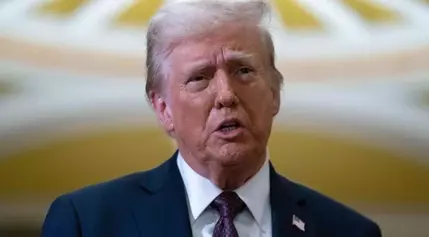
In a significant legal development, the United States Supreme Court has declined to delay the sentencing of President-elect Donald Trump in connection with a hush money case. The decision allows Judge Juan M. Merchan to proceed with sentencing on Friday, following Trump's conviction for allegedly attempting to conceal a 0,000 payment made to adult film actress Stormy Daniels. Despite Trump's denials of any improper conduct, his legal team had sought to postpone the sentencing, arguing that it could interfere with the presidential transition. However, prosecutors maintained that there was no justification for such an extraordinary intervention. The New York courts, including the state’s highest court, had previously rejected similar requests to delay the proceedings.
The Details of the Supreme Court's Decision
In the crisp autumn air, the Supreme Court handed down its ruling on Thursday, rejecting the request from President-elect Donald Trump's legal team to postpone his sentencing in a high-profile case involving allegations of covering up a financial transaction. The case centers around accusations that Trump attempted to obscure a payment made to Stormy Daniels, an adult film performer, during the 2006 period. Trump has consistently denied any wrongdoing and claims that the entire matter is politically motivated.
Judge Juan M. Merchan, who presided over the case, has indicated that he does not intend to impose jail time, fines, or probation on Trump. Nevertheless, the legal battle has been intense, with Trump's attorneys arguing that evidence presented in the Manhattan trial violated a previous Supreme Court ruling that granted Trump broad immunity for actions taken during his presidency. They contended that delaying the sentencing would prevent potential disruptions during the transition period leading up to the inauguration on January 20th.
Prosecutors countered that there was no valid reason for the court to intervene in this state-level case, especially since Trump's legal team failed to demonstrate how a brief virtual hearing would significantly disrupt the transition process. Moreover, they pointed out that a delay could result in a prolonged sentencing process, potentially extending beyond the inauguration date.
Adding another layer of complexity, Justice Samuel Alito confirmed that he received a phone call from Trump just before the emergency motion was filed. Alito clarified that the conversation pertained to matters unrelated to the case at hand.
Ultimately, the judges in New York have determined that the convictions, which involve 34 felony counts of falsifying business records, are related to personal matters rather than official presidential duties. This distinction played a crucial role in the court's decision to move forward with the sentencing.
The case has been represented by D. John Sauer, who was selected by Trump to serve as solicitor general. Sauer also defended Trump in a separate criminal case concerning allegations of attempting to overturn the results of the 2020 election. The defense argued that certain pieces of evidence, including testimony from White House staff and social media posts made while Trump was in office, should have been protected under presidential immunity.
Despite these arguments, the Supreme Court has now paved the way for the sentencing to proceed as scheduled, marking a pivotal moment in this ongoing legal saga.
From a journalistic perspective, this decision underscores the complex interplay between political power and legal accountability. It highlights the challenges faced by the justice system when dealing with individuals holding high office, especially during sensitive periods like a presidential transition. The refusal to grant a delay suggests that the rule of law must be upheld regardless of one's position, reinforcing the principle that no one is above the law. As the nation watches closely, this case serves as a reminder of the importance of transparency and fairness in the judicial process.